
Bioengineer and Biomedical Engineer
Bioengineers and biomedical engineers apply the principles of biology and engineering to solve problems involving living systems. Their work combines scientific knowledge with engineering design to improve biological processes and develop new technologies. In agriculture, bioengineers might design equipment to maximize crop production. Biomedical engineers create new medical devices, pharmaceuticals and diagnostic tools or develop sophisticated software to test novel drug therapies for animal health
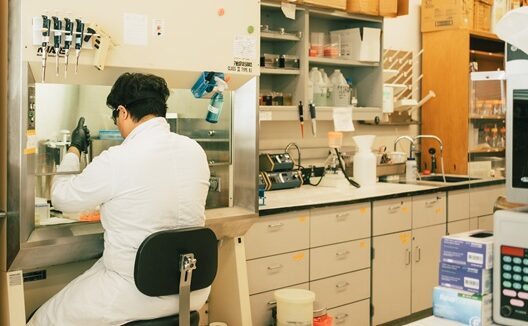
What Responsibilities Will I Have?
- Design, test and optimize biomedical, bioprocessing and agricultural equipment
- Conduct experiments and study biological systems
- Apply engineering and biology principles to improve crops, livestock and food production
- Collaborate with scientists, engineers and clinicians
- Document procedures and maintain accurate records
- Analyze and interpret experimental results to guide improvements
- Present research findings and updates to colleagues, managers or stakeholders
- Develop statistical models, simulations or software to support research and production
- Stay current with research, technologies and best practices
- Assist in scaling laboratory discoveries to commercial, field or clinical applications
- Provide technical support and training on equipment use and maintenance
- Evaluate and improve equipment based on user feedback
Recommended High School Courses
- agricultural education
- biology
- chemistry
- physics
- animal science
- computer science
- mathematics
Education/Training Required
A bachelor’s degree in bioengineering, biomedical engineering, biology or mathematics is typically required to become a bioengineer. Advanced positions often require a master’s or doctoral degree, particularly in research or specialized design. Certification in professional engineering (P.Eng.) may be needed for certain regulated positions.